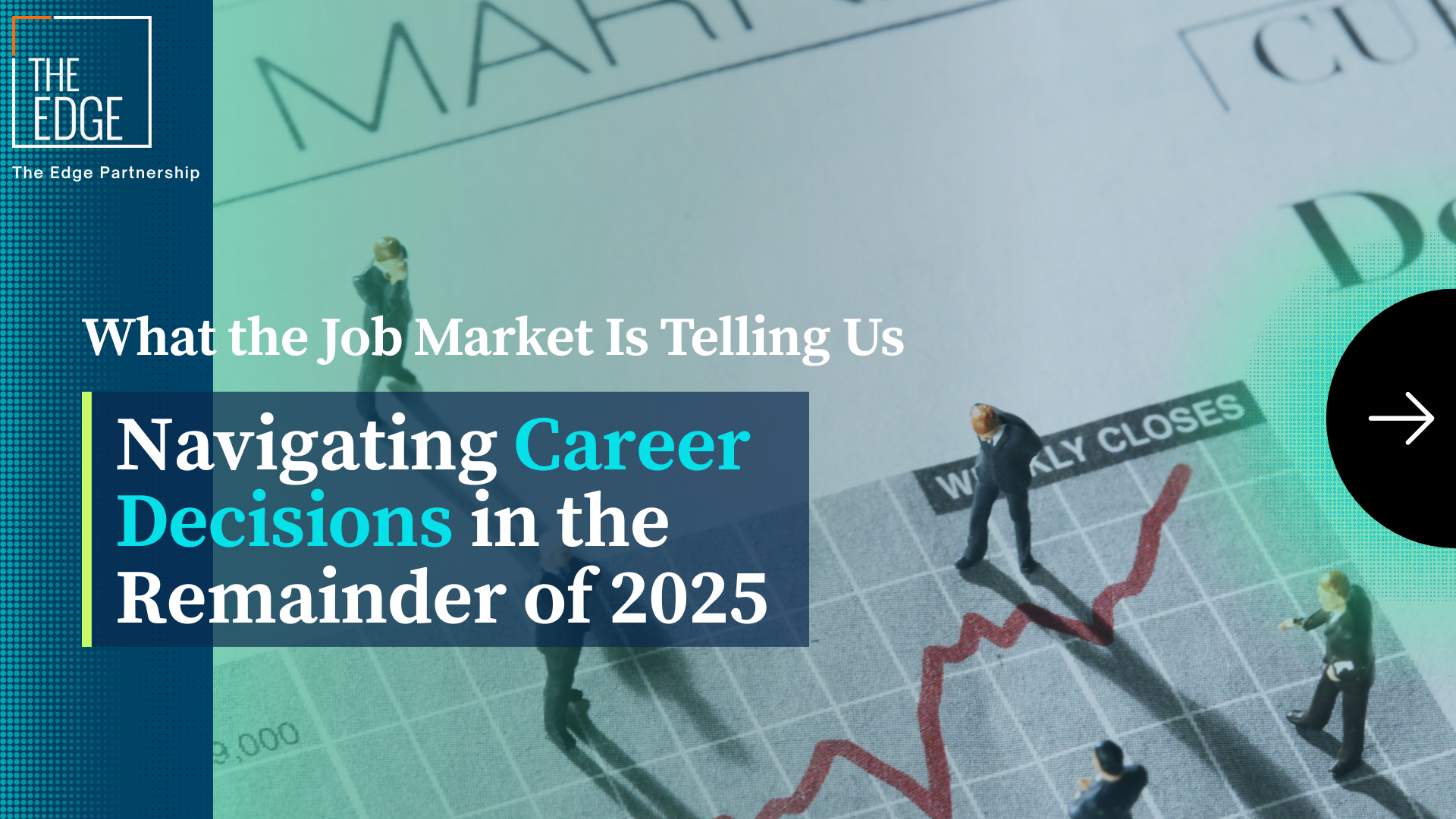
What the Job Market Is Telling Us: Navigating Career Decisions in the Remainder of 2025
September 2025
September 2025
As 2025 moves into its final stretch, the job market across Asia is evolving in ways that demand attention from both employers and professionals.
The headlines may talk about slowing global growth, the impact of AI on jobs, or shifting investment flows, but behind all this there is a nuanced picture of what’s happening.
For many, career decisions taken in the coming months will have lasting implications. Some industries are expanding, others are consolidating, and nearly all are rethinking the skills and leadership qualities they value most.
At The Edge Partnership, we have always worked closely with organisations and candidates across Asia, giving us a frontline view of these shifts. Here are five themes shaping career navigation in the remainder of 2025.
It would be misleading to say the job market has slowed. Across industries such as finance, banking, fintech, digital securities, compliance, healthcare, and consumer technology, hiring pipelines remain active. But the nature of hiring has changed: companies are more deliberate and more selective.
The era of hiring “just in case” talent is behind us.
Organisations want professionals who can add immediate value, who bring proven expertise, and who demonstrate adaptability in times of change. Even in high-growth sectors, candidates are being evaluated not just for what they know, but for how quickly they can translate that knowledge into results.
For job seekers, this means you need to have: depth and relevance matter. It is no longer enough to be broadly skilled; you must show competence in areas aligned with a company’s priorities.
It all comes down to showcasing experience in implementing digital systems, leading regional rollouts or managing sustainability compliance. Candidates who can tell that story will stand out in a crowded market.
Beyond technical or functional skills, employers are placing a premium on leadership: particularly the ability to manage transformation.
Companies are in the midst of digitalisation drives and facing competitive pressures that require reinvention.
Leaders who can guide teams through uncertainty and deliver measurable outcomes are in high demand. This extends beyond the C-suite: mid-level managers who can balance execution with strategic thinking are equally valued.
For professionals, the message is to start thinking about leadership readiness. That doesn’t mean waiting for a title change; it means demonstrating leadership behaviours now and this comes in various forms: whether by mentoring colleagues, leading cross-functional projects, or being proactive in problem-solving.
The remainder of 2025 will reward those who can blend technical competence with a clear capacity to lead.
A striking trend in recent months has been the rise of career pivots. Professionals are increasingly willing to step outside their industry or function in search of long-term resilience and growth.
This makes sense. Sectors like digital finance and healthtech are expanding, while traditional industries in manufacturing or retail are consolidating. For many, the remainder of 2025 is a window to reposition such as to identify where their skills might translate and what additional learning is needed to bridge gaps.
Three questions to ask yourself if you are considering a pivot:
– Which of my skills are transferable?
– Where can I create the most value?
– What’s the one investment I can make now?
The key is not to make impulsive moves but to pursue pivots that align personal aspirations with market demand.
For employers, retention is once again in the news.
Even with selective hiring, companies are struggling to hold onto top performers, particularly in specialist roles. Compensation remains important, but it is no longer the sole factor driving loyalty.
Professionals want to see career pathways, growth opportunities, and flexibility. They want to feel their work is valued and that they are being developed for the future. In an age where hybrid and remote models are still evolving, culture and connection are as important as pay.
For candidates, this means evaluating offers not just in terms of salary packages but in terms of long-term alignment. Asking questions about professional development programmes, mentorship opportunities, and company culture will help ensure you choose roles that support your career beyond 2025.
One of the clearest signals from the job market is that career navigation in 2025 requires strategy. Professionals who thrive are those who balance short-term realities with long-term positioning.
That involves three practical steps:
– Stay informed: Market intelligence whether from news, industry reports, or trusted recruiters like us. It helps you anticipate where demand is heading.
– Build relationships: Networks matter more than ever. Recruiters, mentors, and industry peers can open doors and provide honest guidance.
– Think long-term: The right role isn’t always the one with the biggest paycheck today. It’s the one that keeps you relevant and growing over the next five years.
By adopting this mindset, professionals can move confidently in a market where caution and opportunity coexist.
The market is sending signals of change: selective hiring, rising demand for leadership, growing career pivots and heightened employer focus on retention.
For professionals, the challenge is to interpret those signals and act wisely. For employers, it means creating environments where talent feels supported, challenged, and valued.
At The Edge Partnership, our role has always been about bridging these perspectives: helping organisations find the right talent while guiding professionals toward the opportunities that align with their skills and aspirations.
Your career isn’t just about the next job — it’s about the right job. If you’re looking for more exciting opportunities, visit TheEdgePartnership.com. You’ll find job postings, advice and options to connect with seasoned recruiters who can help guide you!
Why Q1 matters more than you think? January to March is one of the most strategic hiring windows…
Read More
As the year-end approaches, conversations inevitably turn to bonuses. For many professionals, this is the moment that anchors…
Read More
As 2026 approaches, many professionals assume hiring slows to a crawl but in reality the slowdown is exactly…
Read More